
London's lost allure
Not everyone wants to come to London any more. They have at least half a point.
‘I have friends studying [in London]. They say it’s rubbish. Too expensive. And the food is terrible.’ Japanese student, in Tokyo, June 2025.
‘Oh, you’re from London? So, you must have a knife on you…’ Serbian 30-ish guy, half-joking, in Belgrade, February 2025.
I’ve always been proud to tell people I’m from London. Probably because, in the past, it’s elicited a variation on one of three responses:
‘Oh cool! I’ve never been, it sounds amazing.’
‘I love London! I was there recently and it was great, there’s so much going on.’
‘Like, really from London? It’s so rare to meet someone actually from there!’
But after six months of travelling across Eurasia and introducing myself to countless people (mostly in their 20s and 30s), I can confirm that things are changing. ‘London’ now carries different connotations.
It’s still a city people know about, and often one they want to visit. But it’s also become a place that people feel able to dismiss, whether they’ve been or not. Usually for one of two reasons: it’s expensive, or it’s dangerous. (And, yes, because everyone thinks British food is bad.)
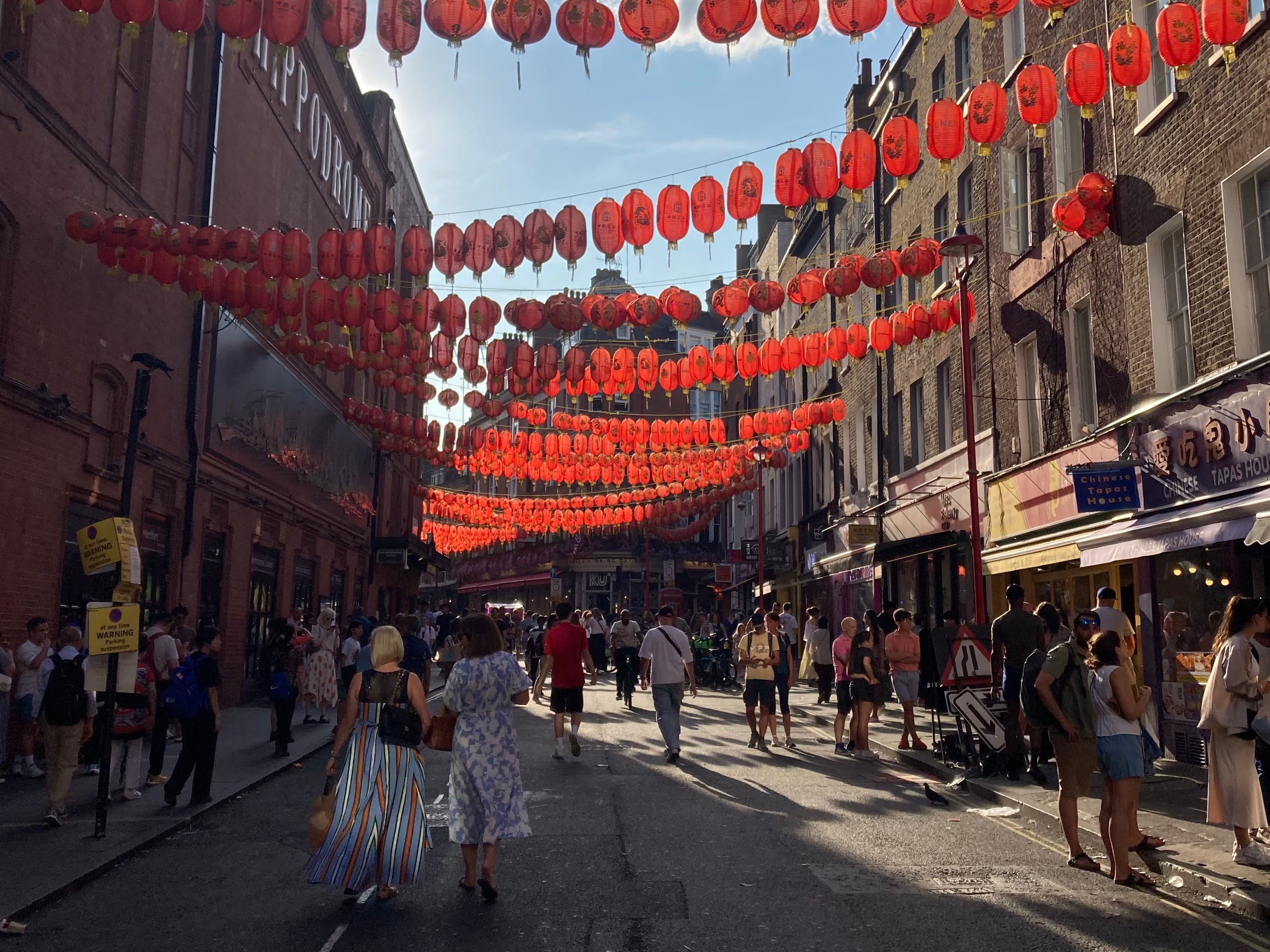
These accusations are not entirely misplaced. At least when it comes to London being expensive, the youth of the world are not wrong. Rent is the biggest issue (as most people reading this will know…), but not one I’ll dwell on now. Because recently it’s food I’ve been most perturbed by — especially in comparison with Tokyo.
For two months, in May and June, my friend Martin and I went to a different restaurant in Shibuya (central Tokyo) almost every weekday, after language classes. Every experience was good — many were excellent — and prices for a full, hot, and (seemingly) freshly-cooked meal tended to be around £4-6.1
The only thing you can get for that price in London is a supermarket meal deal. And it seems to be getting worse. Even in the 6 months I was away, prices jumped. One of my favourite ramen places, TENMARU in Finsbury Park, now sells a bowl of its excellent vegan Lemon Ramen for £17 — 3x the going rate in Tokyo. Up from £15 in December last year, and £11.80(!) four years ago. At the Wahaca burrito stand on the Southbank, my go-to for a quick lunch in the area, it’s now £9.50 for a sweet potato burrito. It was £8.50 last year and £7.95 the year before (I remember thinking even that was a lot). This for ready-made food from a van, to be eaten out in the cold.
I don’t think it’s the restaurants’ fault. I have little doubt that most are at best scraping by (even Wahaca, which has only recently returned to profit). There’s a video doing the rounds where the owner of Sambal Shiok, a Malaysian restaurant on the Holloway Road, explains why her £22 laksa costs as much as it does — and why she still sometimes still makes a loss on it. It is illuminating.

The video is part of UK Hospitality’s #TaxedOut campaign, pushing for lower business rates, adjustments to NICs (the increases in last year’s Budget, which came into effect in April, have hit hospitality hard), and a cut to VAT in the Budget later this month. Food price inflation and rising utilities costs aren’t helping, either.
The VAT issue is particularly intriguing. Other European countries tend to apply ‘reduced rates’ to food and (non-alcoholic) drinks sold in restaurants, averaging around 10-13%. It’s 10% in France, Spain and Italy. 13.5% in Ireland, 12% in Belgium, 9% in the Netherlands, and 8.1% in Switzerland.2 It’s also 10% in Japan and Korea, and 9% in China.
This is probably the last thing the government’s about to change, but it does make you wonder how we ended up with 20% in the first place. And whether it forces cost cuts in other areas, e.g. around ingredients. While I’ve spent lots of time defending the quality of London food this year (and British cuisine, which I think is deeply underrated — come at me), you do often have to be willing and able to spend even more money to eat something at least upper-mid.


There are cultural factors at play here, too. Part of what makes Tokyo restaurants so cheap, as far as I can gather, is high turnover. Pretty much everyone eats out, especially for lunch (often solo), spending no more than 20 minutes in place.3
Lots of proprietors are also older, or at least running businesses out of properties that had their mortgages paid off decades ago. My favourite local noodle place on this trip had been run by the same obachan (elderly lady) for 50 years, previously with her brother. The local sushi restaurant had been going for 75 years, originally set up by the current owner’s father.
Licensing laws help a bit: Tokyo has much more extensive mixed zoning, without the strict demarcation between residential and commercial that exists in London (one of my lunches with Martin was in a curry restaurant run out of someone’s kitchen in a second-floor apartment). Staffing costs are also kept low by the small spaces and counter-top set-ups, with one member of staff often able to both be chef and maïtre d’ — admittedly with the help of ubiquitous ordering machines.

This might all seem pretty insignificant in the context of the ‘big’, polycrisic problems we’re facing today. But beyond London’s declining global reputation, I’m concerned about the impact on civic space and the health of our cultural ‘soil’.4
As I alluded to at the weekend when commenting on Vittles’s Zohran and small restaurants piece, being out in the world, interacting with a plurality of other people, feels more important than ever. A future where we all stay at home rotting in our little nests, living in a city mainly so our meals can be delivered to us more quickly, does not end well on many counts — not least that of societal cohesion.5 Nor does the (frankly very likely) alternative where restaurants and other venues become the preserve of the well-off, the only people who can afford to be in them; I’ve just had a glimpse of what this looks like in two months subletting on Chatsworth Road (in Homerton, Hackney) and I don’t like it.6 Professor Green articulates it better than I ever could in this clip: the emergence of two worlds, one wealthy and the other less-so, co-existing but never overlapping.

This is about gentrification, as the Prof says, but that almost makes it sound too localised. We’re getting beyond the point of just worrying about an influx of rich people and expensive eateries in any given area: the concern going forward is that everywhere within, say, 5 miles of the centre becomes too expensive for much of the city’s population (has this already happened??). Moving us towards a Parisian future, where a large inner ring of the city becomes a mostly-white enclave for knowledge workers and tourists while those who provide essential services on lower wages live in an outer suburban ring, commuting in each day to earn their living and keep the city running.7
This is, in many ways, the opposite of what London has been hitherto. My impression is that one of London’s great strengths, a large part of what’s made it a cultural powerhouse over many decades (centuries?), is its mixing of people. It’s the only city I’ve been to apart from New York that feels truly global: a place where everyone comes, where every country and religion and ethnic community is represented. Where you can eat food and dance to music from anywhere imaginable, feeding the ‘soil’ from which further cultural efflorescence blooms.8 Making it, in turn, a place that even more people want to come to and share their energy with.
The future we’re being presented with is sterile by comparison. It’s ‘nice’, it’s Instagrammable, it’s shiny and health-conscious, but it’s not for everyone. Difference has been priced out.
And here we come, in a roundabout way, to the charge that London is dangerous. The Trump/Farage/Musk notion that the city has become ‘lawless’, which seems to have spread even beyond the Anglosphere (see second quote at the top). The numbers don’t back it up — violent crime has increased in the past decade, but the overall picture is more mixed — and nor does lived experience. Polls suggest while a majority of Londoners think violent crime is increasing, this is not at the rates that people outside the city do.9 Presumably many would be shocked to discover that there are millions of people living here who go out every day, to study and work and shop, without anyone waving a knife in their faces.
A lot of this narrative is, I suspect, founded on racism. It’s based on warped representations of city life that play on fear of the ‘other’, amping it up for political ends. I had to explain to my Granny the other day why a Mail Online article about ‘masked Muslim youths’ on the streets of East London was not grounds for fear, but a dangerous twisting of reality (Farage likened them to a ‘foreign invading army’ — I feel disgusted even repeating it and refuse to share a link, they don’t deserve another click).10
One of the sad ironies to all this is that London is significantly safer now than it was in, say, the ‘80s. Based on what I’ve heard from my Dad and other elders, the risk of getting your head kicked in for looking ‘different’, however that difference might be defined, is significantly lower now than it used to be. Part of what made London more dangerous then was intolerance — racism, xenophobia, homophobia — and part of what’s made London a much better place to live in the decades since has been an increase in mutual acceptance of and respect for people of all ethnicities, beliefs and sexualities (at least outwardly).11 My big concern with the ‘London is dangerous’ narrative is not just that it’s wrong, but that in its stirring up of racial and other communal divisions it is itself making London more dangerous again.12
London is not an easy place to live. I would imagine it’s not an easy place to visit, either. It is vast and chaotic and expensive. If you’re scared of people, made uneasy by the presence of different cultures and ethnicities, you will probably not like it. There are issues with housing, with inequality, with mental health, and, yes, sometimes with crime. There is lots of work to do.
But London is still one of the world’s great cities — at least for now. While interest might shift to the likes of Dubai and Shanghai (they seem to make a better case for the future these days — one for another post…), the diversity of London, in terms of the people living here and visiting, as well as its cultural, culinary, sporting, historical, intellectual and other offerings, remains unparalleled. Coming back to it in mid-August from travelling, it felt incandescent (although London is, of course, best in the summer).
Part of why the Mamdani win in NYC is so heartening is because he is highlighting some of the very same issues Londoners are facing, and which are contributing to this negative perception externally — with the crisis of affordability paramount. And he is committing to try and tackle them. Because these are issues that can, hopefully, with time and acknowledgement, be addressed. Certainly, if London is to remain relevant in a future that is shifting East, it too will need to work at it. At least for now, the sheen is wearing off.
Yes, a weak Yen helps here, but we’d still only be talking £6-9 even if it was 50% stronger.
In Germany, restaurant food is currently subject to the standard 19% VAT rate, but the government is planning to permanently reintroduce the 7% reduced rate which was applied during the pandemic from the start of next year.
Something similar could be said for France in terms of everyone eating out - but the time spent is obviously much longer… Obviously there’s a cycle here, with numbers eating out and prices of food interdependent.
I’ve borrowed the soil framing from Deborah Curtis, who runs The Great Imagining.
Interestingly, many of the countries mentioned for their low VAT rate on restaurant food have even lower rates for takeaway food. Which feels like the wrong incentive to me.
Note that upmarket restaurants, while hiking their prices, are doing very well, with the lowest number of reported closures for a decade.
Most Parisians refuse to even see these workers and the areas they live in as part of ‘Paris’ — the banlieues are their own, distinct administrative entities — which adds insult to injury, to my mind.
Obviously these cultural worlds often exist in parallel, layered on top of each other with limited crossover. But you can cross the thresholds in most cases, entering restaurants, bars, clubs, shops, that transport you far from the UK (many of my favourite London experiences have involved precisely this, often unintentionally). And even if you don’t, the very fact that these spaces are there, that you’re aware of them, can (I think/hope) hold you in a state of openness.
My Dad showed me a reply to a phone theft story on X a while back, by an American woman saying she was ‘sorry for what has happened to your beautiful city’, that she had a lovely time once, but could not now imagine ever coming back…
If you haven’t seen the videos of travel influencers visiting Brixton, making out it’s the most dangerous place on earth…maybe watch but be prepared to be kind of appalled? This was the one I saw. Not political in this case, but still using misplaced outrage to milk the algorithm for personal ends.
At least anecdotally, this is a large part of why young people have flocked here for decades: in London you’re free to be yourself! I felt it coming home, too, especially from Japan — which, while incredible in many ways, can often feel socially stifling.
The inequalities discussed above, the emergence of two worlds, can’t help, either: is it any wonder there’s been an increase in phone and watch thefts in recent years?